Right now
Right now as of Oct 28, 2026
- Permit No permit needed. Entry fee: $5/person + $10/car (non-residents).
Status note (Oct 28, 2026): Open. DLNR's October 23, 2026 notices list no closure at Wailuku River State Park and say Hawaii Island state parks have reopened. Part of the ʻAkaka Falls trail remains closed for fallen trees. What the status labels mean
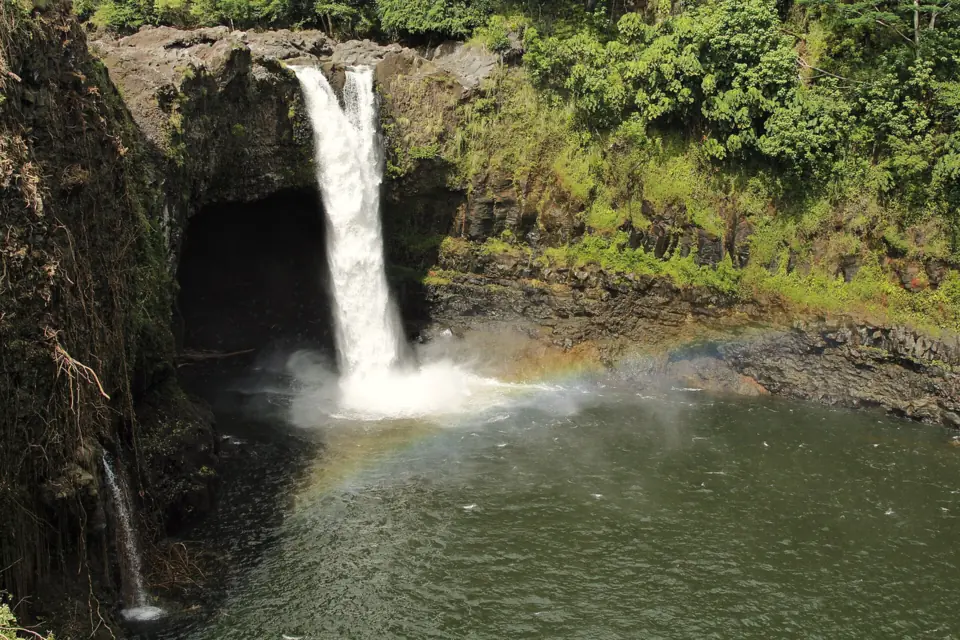
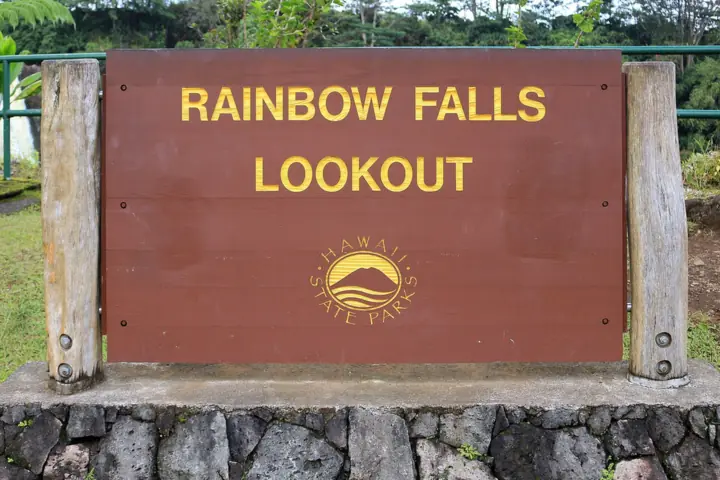
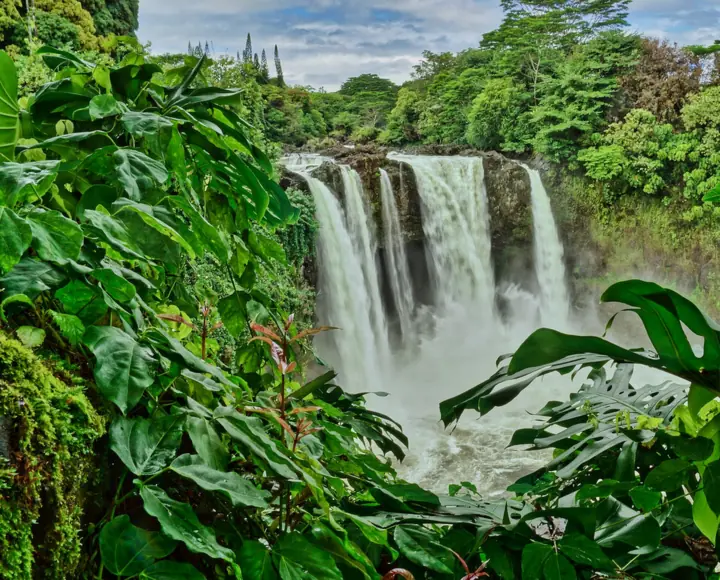
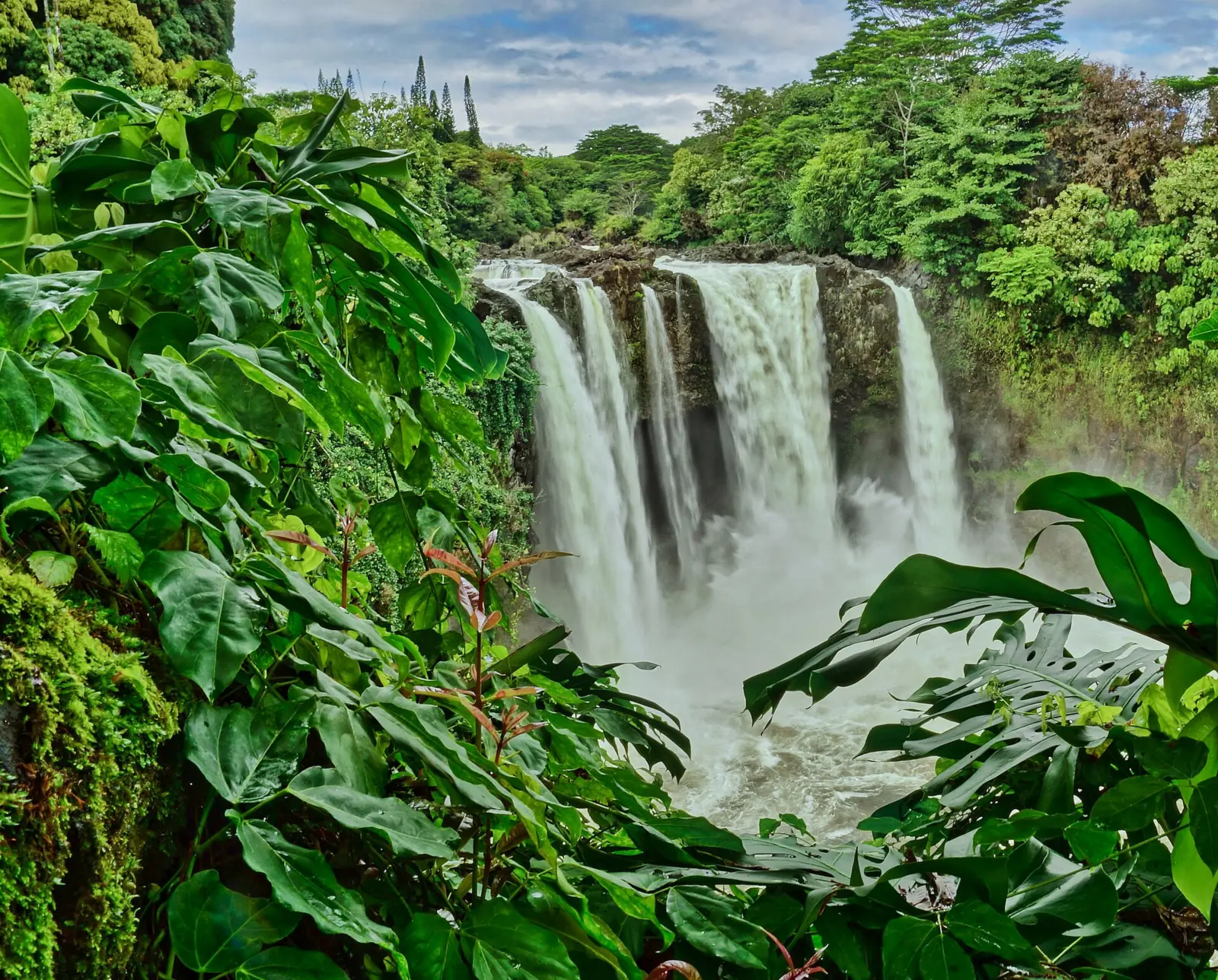
Rainbow Falls, or Waiānuenue, is an 80-foot waterfall on the Wailuku River in Hilo, inside Wailuku River State Park. You see it from a viewing area a short walk from the parking lot, open daily 7:00am to 5:30pm. Since January 2026, non-residents pay $5 per person plus $10 per car, and one payment also covers Boiling Pots upstream.
About Rainbow Falls
At Rainbow Falls, the Wailuku River drops about 80 feet over a lava cave into a pool. DLNR's Division of State Parks manages the site as part of the 16.3-acre Wailuku River State Park in Hilo. Hilo is on Hawaii Island, which many visitors call the Big Island.
According to Wikipedia, the Hawaiian name, Waiānuenue, means 'rainbow water.' It adds that rainbows show in the mist on sunny mornings, around 10am. Hawaiian legend, as DLNR retells it, says the cave beneath the falls was the home of Hina, mother of the demigod Maui.
The same park includes Boiling Pots, a chain of pools farther up the Wailuku River lined with hexagonal basalt columns. It's at the end of Peʻepeʻe Falls Drive. According to the park page, one payment covers both stops.
The fees are new. Wailuku River was one of four parks where the state Land Board approved paid parking in November 2025. The park page shows a fee update dated January 16, 2026. Beat of Hawaii reported in July 2026 that Diamond Parking Services runs the lot under a Land Board permit. The state keeps 95.3% of net operating income, it said.
Getting there and parking
Rainbow Falls is in Hilo, with a parking lot on Rainbow Drive off Waiānuenue Avenue and a short walk to the overlook. Non-residents pay $5 per person plus $10 per car, by card only.
Parking, fees and hours
The parking lot is on Rainbow Drive, off Waiānuenue Avenue in Hilo. From the lot, a short walk leads to the viewing area. DLNR doesn't publish an exact distance, but no real hike is involved.
Hawaii residents with a Hawaii driver's license or state ID enter and park free. Everyone else pays $5 per person to enter and $10 per vehicle to park, and children 3 and under are free. Payment is by credit card only, so don't plan on paying cash.
Commercial vehicles pay more: $25 for 1 to 7 passengers, $50 for 8 to 25, and $90 for 26 or more, according to DLNR. To add Boiling Pots, drive to the end of Peʻepeʻe Falls Drive. The same fee covers it.
The park is open daily from 7:00am to 5:30pm, and the gates lock at 6:00pm. Get back to your car before then.
Adding ʻAkaka Falls
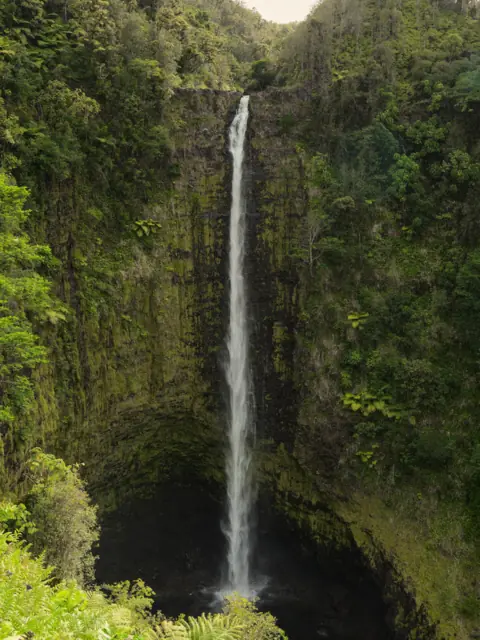
ʻAkaka Falls is a separate state park on the same island, at the end of ʻAkaka Falls Road (Hwy 220), 3.6 miles southwest of Honomū. We don't list a drive time because no official source gives one. DLNR's October 23 notices say part of its trail is closed for fallen trees.
Map and nearby falls
Map loads as you scroll. Open in OpenStreetMap
OpenPartly open / seasonalUnconfirmedClosedLarger map
The walk to the overlook
There isn't a real trail at Rainbow Falls. The viewing area is close to the lot, and the walk is easy. That makes it a quick stop if you're short on time in Hilo.
Near the viewing area, a walkway leads past an old banyan tree toward the top of the falls. Stay on the walkway. DLNR doesn't list any route down to the pool.
For dogs, Hawaii's general state park rule (HAR §13-146-10) allows pets on a leash no longer than 6 feet. Pets are barred from swimming areas, beaches and posted areas. DLNR's park page adds nothing site-specific.
We couldn't confirm restrooms or wheelchair access for Rainbow Falls from an official source. We haven't filled those in, so check with the park if they matter for your visit.
When to visit
Rainbow Falls is open year-round. For the best chance at a rainbow, Wikipedia points to sunny mornings around 10am, when sunlight hits the mist.
Storms and park status
On August 15, 2026, Hurricane Lala sent the Wailuku River in Hilo from 3.4 feet to 16.2 feet overnight, Civil Beat reported, citing USGS. We haven't found an official account of any damage at the falls.
DLNR's October 23, 2026 notices list no closure at Wailuku River State Park, and they say Hawaii Island state parks have reopened. Part of the ʻAkaka Falls trail is still closed for fallen trees. If you're also heading to Kauai, see our Wailua Falls page for that park's partial reopening.
When is the water highest?
At a USGS stream gauge about 2.7 mi from the falls, the flow averages highest in December and lowest in June, based on 30 years of records (1995 to 2024).
Show the numbers
| Month | Average flow (cfs) |
|---|---|
| January | 218 |
| February | 249 |
| March | 253 |
| April | 231 |
| May | 137 |
| June | 78 |
| July | 121 |
| August | 224 |
| September | 130 |
| October | 159 |
| November | 268 |
| December | 282 |
| Height | 80 ft |
|---|---|
| Trail | Short walk from the Rainbow Drive lot to a roadside overlook |
| Difficulty | Easy |
| Entry fee | Non-residents: $5 per person entry plus $10 per vehicle parking. Hawaii residents with a Hawaii ID and children 3 and under are free. |
| Permit / reservation | No permit; non-resident entry and parking fees apply |
| Parking | Lot on Rainbow Drive; $10 per non-resident car |
| Hours / season | Daily 7:00am-5:30pm; gates lock at 6:00pm (DLNR) |
| Dogs | State rule: Hawaii's state park rules allow pets on a leash no longer than 6 ft, except in swimming areas, on beaches and in posted areas (HAR §13-146-10). DLNR's park page doesn't add a site rule |
| Swimming | No swimming area listed by DLNR; Hawaii DOH advises against freshwater swimming (leptospirosis) |
| Walk behind the falls | No |
| Managed by | Hawaii DLNR Division of State Parks (Wailuku River State Park) |
Safety and swimming
The Hawaii Department of Health advises against swimming or wading in any freshwater stream or pond in Hawaii, especially if you have cuts or open sores. The reason is leptospirosis. The bacteria come from animal urine and enter through broken skin or the eyes, nose or mouth.
DLNR's older Na Ala Hele hiking-safety sheet warns that rain on the mountaintops and ridges can suddenly raise the water level in a stream. Maui County Fire adds that flash floods can happen on sunny days.
DLNR's park page lists no swimming area at Rainbow Falls. Enjoy the falls from the overlook, and don't leave the viewing area or climb onto the rocks above the falls. For general tips, see our waterfall safety page.
Where to stay near Rainbow Falls
Compare hotels, cabins and rentals close to the falls around Hilo.
See places to stay nearbyAffiliate link: we may earn a commission at no cost to you. Partners do not see or change our waterfall facts. Disclosure.
Photos
Rainbow Falls FAQ
Is Rainbow Falls free?
For Hawaii residents with a Hawaii ID or driver's license, yes. Since January 2026, visitors pay $5 per person to enter plus $10 per car to park, by credit card only. Children 3 and under are free.
What are Rainbow Falls hours?
DLNR lists the park as open daily from 7:00am to 5:30pm. The gates lock at 6:00pm.
How long is the walk to Rainbow Falls?
It's a short, easy walk from the Rainbow Drive lot to the overlook. DLNR doesn't publish a distance, and there's no real trail. The 80-foot falls are visible from the viewing area.
When is the best time to see a rainbow at Rainbow Falls?
According to Wikipedia, rainbows show in the mist on sunny mornings, around 10am.
Does the Rainbow Falls fee include Boiling Pots?
Yes. One paid entry and parking fee covers both Rainbow Falls and Boiling Pots in Wailuku River State Park, according to DLNR.
Can you swim at Rainbow Falls?
DLNR's park page lists no swimming area. The Hawaii Department of Health also advises against swimming or wading in any freshwater stream in Hawaii because of leptospirosis. View the falls from the overlook.
Is ʻAkaka Falls near Rainbow Falls?
Both are DLNR state parks on Hawaii Island. ʻAkaka Falls State Park is at the end of Hwy 220, 3.6 miles southwest of Honomū. We don't list a drive time because no official source gives one. As of DLNR's October 23, 2026 notices, part of the ʻAkaka trail is closed for fallen trees.
Nearby waterfalls


More waterfalls to explore
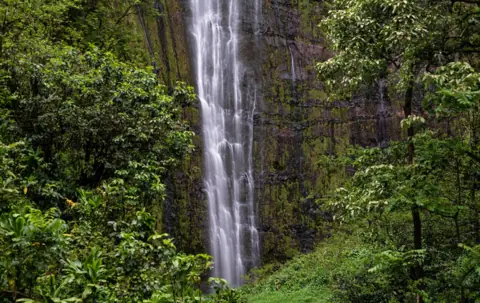 Waimoku Falls on the Pīpīwai TrailHawaii · 90 mi straight-lineOpen400FT
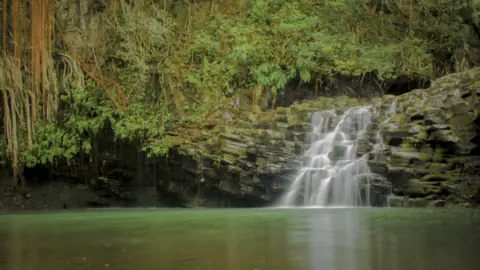 Twin FallsHawaii · 110 mi straight-lineOpen
On these lists: Roadside waterfalls
Sources
- DLNR State Parks: Wailuku River State Park
- DLNR: Expanded parking management (Feb 23, 2026)
- DLNR Important Park Notices
- Hawaii News Now: State adds paid parking at 4 parks (Nov 20, 2025)
- Beat of Hawaii: Who keeps your waterfall fee (July 2026)
- Hawaii DOH: Leptospirosis
- DLNR Na Ala Hele: Hiking safety
- Maui County: Flash flood precautions
- Civil Beat: Hurricane Lala brings rain and strong winds (Aug 15, 2026)
- Hawaii Administrative Rules §13-146-10 (state parks: animals)
- DLNR State Parks: ʻAkaka Falls State Park
- Wikipedia: Rainbow Falls (Hawaii)
Last verified Oct 28, 2026 by The Waterfall Guide editorial team. Conditions change: confirm with Hawaii DLNR Division of State Parks (Wailuku River State Park) before you go. Spotted something out of date? Report a correction.