Mountain West & Southwest
Waterfalls in Arizona
This site covers three waterfalls in Arizona. Havasu Falls and Mooney Falls are on the Havasupai Indian Reservation, which is tribal land outside Grand Canyon National Park. Fossil Creek Waterfall, reached by FR 708 off State Route 260, is in the Coconino and Tonto national forests in central Arizona. Havasu and Mooney Falls need a 3-night Havasupai reservation, while Fossil Creek needs a vehicle permit only from April 1 to October 1.
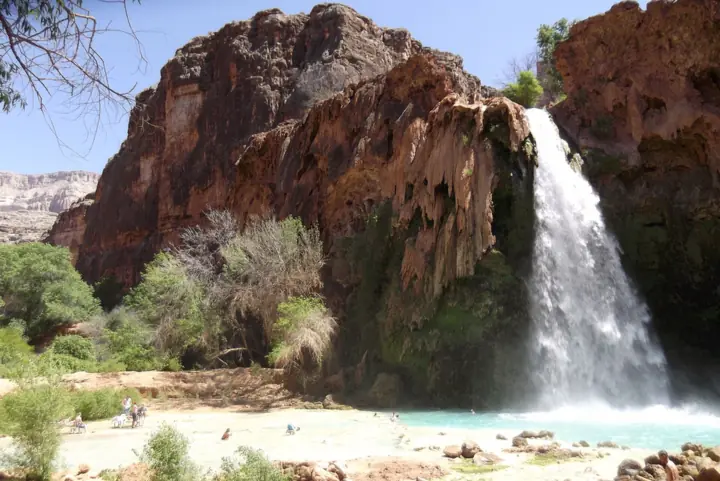
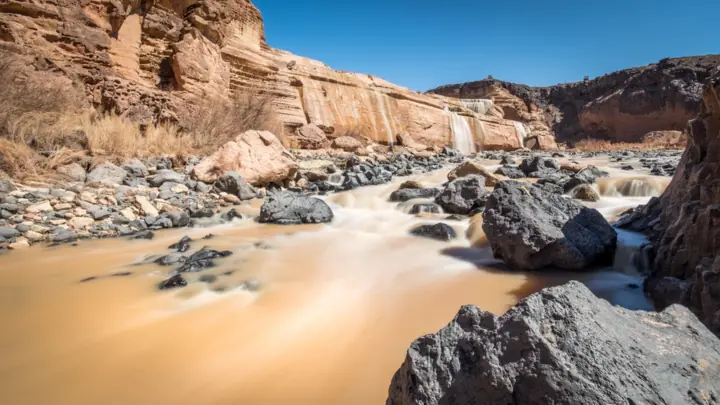
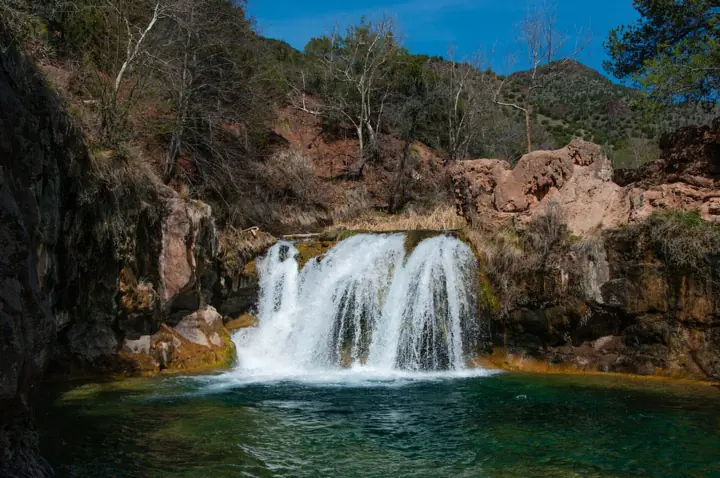
Arizona waterfalls on this site
Each card shows the height where a source gives one, and the status as far as we can tell, from our checks of October 28, 2026 to November 8, 2026.
Blue-green pools on Havasupai land; a 3-night permit and a 10-mile hike each way.
Havasu Falls10 mi each way · HardOpen100FT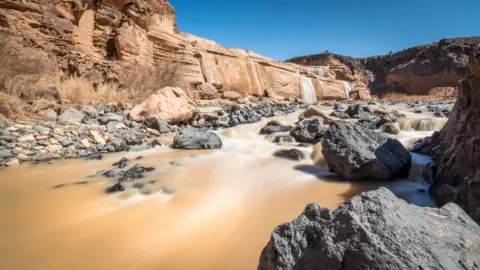
A seasonal, mud-brown waterfall on the Little Colorado River, on the Navajo Nation. Closed to the public.
Grand FallsClosed to the public (Navajo Nation Parks) · Not applicable: closedClosed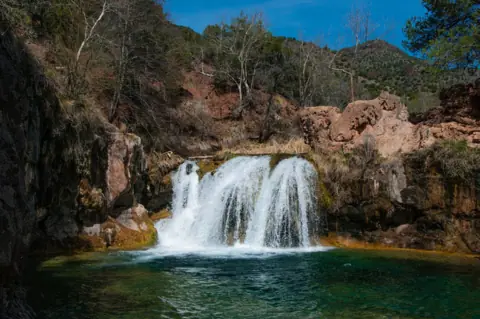
Spring-fed travertine falls; 1 mi each way, $6 vehicle permit Apr 1 to Oct 1, no lifeguards.
Fossil Creek WaterfallAbout 2 mi round trip · Easy (not rated)Seasonal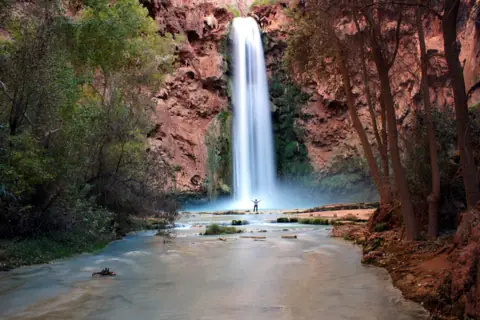
About 200 ft per NAU, 0.5 mi past camp; chains and ladders lead to the base.
Mooney Falls10.5 mi each way; 0.5 mi from camp · Hard, chain descentOpen200FT
Map of Arizona waterfalls
The map shows where each of the 4 Arizona waterfalls in this guide is located.
Map loads as you scroll. Open in OpenStreetMap
OpenPartly open / seasonalUnconfirmedClosedLarger map
| Waterfall | Status | Area | Height | Trail | Difficulty | Fee / permit | Swimming |
|---|---|---|---|---|---|---|---|
| Havasu Falls | Open | Havasupai Reservation, Supai | 100 ft | 10 mi each way | Hard | $455/person (3 nights) | Yes, in the pools |
| Grand Falls | Closed | Little Colorado River, Navajo Nation | Not listed | Closed to the public (Navajo Nation Parks) | Not applicable: closed | Closed | Closed |
| Fossil Creek Waterfall | Seasonal | Fossil Creek Wild and Scenic River | Not listed | About 2 mi round trip | Easy (not rated) | $6/vehicle Apr 1 to Oct 1 only | Yes, no lifeguards |
| Mooney Falls | Open | Havasupai Reservation, Supai | 200 ft | 10.5 mi each way; 0.5 mi from camp | Hard, chain descent | Included in Havasupai booking | No Mooney rule found |
Overview of waterfalls in Arizona
Havasu Falls pours roughly 90 to 100 feet into blue-green pools on Havasu Creek, per Wikipedia. Mooney Falls is farther down Havasu Creek, and an NAU Cline Library exhibit lists its drop at about 200 feet. Reaching its base means climbing down chains and ladders. The Havasupai Tribe sells the reservations and sets the rules for both falls.
The Forest Service lists a 1-mile creekside trail to Fossil Creek Waterfall. From April 1 to October 1, Fossil Creek is day use only and needs a vehicle permit. The Forest Service lists no permit season from October 2 to March 31.
This site also has a page for Grand Falls on the Little Colorado River, which is closed to the public. Navajo Nation Parks and Recreation says "Grand Falls is currently Closed to Public" and directs questions to the Leupp Chapter.
Arizona's three open waterfalls on this site work very differently. The Havasupai falls need a 3-night booking, while Fossil Creek is a day trip with a seasonal permit. The sections below compare who manages each one, what you need, and the heat and flood risks.
Who manages each waterfall and what you need
The Havasupai Tribe manages Havasu and Mooney Falls under one 3-night reservation, and the USDA Forest Service manages Fossil Creek Waterfall.
| Waterfall | Managed by | What you need | 2026 cost |
|---|---|---|---|
| Havasu Falls | Havasupai Tribe | 3-night reservation, year-round; no day hiking | $455 per person (campground) or $2,277 per lodge room |
| Mooney Falls | Havasupai Tribe | The same reservation as Havasu Falls | No separate fee |
| Fossil Creek Waterfall | USDA Forest Service (Coconino and Tonto national forests) | Vehicle permit April 1 to October 1; none October 2 to March 31 | $6 per vehicle in permit season |
Havasu and Mooney Falls: one Havasupai reservation covers both. Every booking is 4 days and 3 nights. NPS says 'NO DAY HIKING IS ALLOWED.' In 2026 Early Access ran January 21 to 31, and the general sale opened February 1 at 8:00 a.m. Arizona time, per NPS. Our Havasupai permit guide covers the booking steps.
Fossil Creek: Recreation.gov sells the $6 per-vehicle reservation, which covers one vehicle and up to 12 people at one named lot. In 2026 the permit season ran April 1 to October 1. The Forest Service lists October 2 to March 31 as a no-permit season.
Pets: the Havasupai Tribe bans pets, service animals and privately owned horses anywhere on the reservation. The Fossil Creek permit pages say nothing about dogs, and we found no official pet rule there.
Waterfall hikes in Arizona compared
All three falls take a walk, but the Havasupai hikes are long and need an overnight booking. Fossil Creek is the only short day hike of the three.
| Waterfall | Trail | Distance | Notes |
|---|---|---|---|
| Havasu Falls | Hualapai Hilltop to the campground | About 10 mi one way (8 mi to Supai Village) | 3-night reservation; no day hiking |
| Mooney Falls | Campground to the falls | 0.5 mi past the campground (NPS) | Chain-and-ladder descent to the base (Wikipedia) |
| Fossil Creek Waterfall | Dixon Lewis Trail (formerly the Waterfall Trail) | About 1 mi each way (Forest Service listing) | Day use; vehicle permit April 1 to October 1 |
Swimming at Arizona's waterfalls
You can swim at Havasu Falls and at Fossil Creek, but neither has lifeguards or flood shelter. We found no Mooney-specific swimming rule.
- Havasu Falls: swimming in the pools below the falls is allowed. The official Havasupai FAQ says the water stays about 70°F all year.
- Mooney Falls: the tribe says not to hike past the top of Mooney Falls or enter narrow parts of the canyon when it is raining or flooding.
- Fossil Creek: Recreation.gov says 'There are NO LIFEGUARDS on duty. Enter the water at your own risk.' We found no official rule on jumping.
Flash floods are the main risk in the swimming season. See the heat and flood section below and our waterfall safety page.
Heat and flash floods at Havasu and Fossil Creek
Summer heat and monsoon flash floods are the two main hazards at Arizona's waterfalls, per NPS, the National Weather Service and the Havasupai Tribe.
Heat: NPS says Havasu Canyon summer temperatures can reach 115°F, and that trails into Supai close when temperatures exceed 115 degrees. The Havasupai FAQ says May to September temperatures can exceed 100°F. The National Weather Service advises planning outdoor activity early in the morning or late in the evening, and drinking plenty of water.
Monsoon: NWS Flagstaff says the northern Arizona monsoon officially runs from June 15 to September 30. The Havasupai FAQ puts flash-flood season at about July to September. It says to go to high ground if floodwater approaches. In rain or flooding, don't hike past the top of Mooney Falls or into narrow canyon sections.
Recent Havasu Canyon floods: NPS lists flood damage in 2018, 2019, 2022 and 2024. On August 22, 2024, a flash flood killed a hiker from Gilbert, Arizona, and the Arizona National Guard carried out 104 evacuations, AZPM reported. The tribe closed the area indefinitely, then said on August 29 that the campground and lodge would stay closed through September 30, Arizona's Family reported. A June 3, 2025 flood stranded hikers near Havasu Creek, and all were accounted for, KNAU reported.
On the road to Fossil Creek: in permit season, the only drive in is 14 rough miles on FR 708 from State Route 260. NWS says 'NEVER drive through flood waters', that '12 inches of water can sweep a car off the roadway', and that 'Most flood fatalities happen in vehicles.'
Arizona waterfall closures and conditions (as of Oct 2026)
As of October 2026, Havasu and Mooney Falls are open and Fossil Creek is seasonal.
Havasu and Mooney Falls: open. As of October 28, 2026, the latest status update on the official reservations site is dated August 31, 2026. It says 'Havasupai Is Open.' It adds that recent flooding reports were at Grand Canyon National Park, not at Havasupai. NPS says some areas of Havasu Canyon remain closed and that the canyon can close at any time.
Fossil Creek Waterfall: seasonal. As of October 25, 2026, the 2026 permit season has ended. The Forest Service lists no permit season from October 2 to March 31. On October 29, 2026, the Coconino National Forest alerts page listed no Fossil Creek closure and no FR 502 or FR 708 closure. Road conditions change, so call the Fossil Creek hotline at 928-226-4611.
As of October 25, 2026, the Havasupai Tribe had posted no 2027 reservation dates or prices. The Forest Service had not announced a 2027 Fossil Creek permit season.
Planning tips for waterfalls in Arizona
Arizona waterfall trips depend on reservation sales, fuel, arrival times and remote rescue, per NPS, Recreation.gov and the Havasupai Tribe.
- Watch for the Havasupai sale. No 2027 dates were posted as of October 25, 2026. The 2026 general sale opened February 1, so check havasupaireservations.com from early January.
- Fuel up before Hualapai Hilltop. The Havasupai trailhead is about 60 miles north of Historic Route 66 on Indian Road 18. The nearest gas is 70 to 90 miles away.
- Know the Havasupai distances. NPS lists about 10 miles from Hualapai Hilltop to the campground, and Mooney Falls is 0.5 mile past the campground.
- Arrive early at Fossil Creek in permit season. Recreation.gov says you must reach the Hwy 260/FR 708 junction by 2 PM. It says a high-clearance vehicle is highly recommended.
- Expect help to be far away. The Havasupai FAQ says Supai has no public medical facilities or trained rescue teams. Fossil Creek has no lifeguards, Recreation.gov says. See our waterfall safety page for general tips.
Arizona waterfalls FAQ
Which Arizona waterfalls need a permit or reservation?
Havasu and Mooney Falls need a 3-night Havasupai reservation year-round, which cost $455 per person at the campground in 2026. Fossil Creek Waterfall needs a $6 vehicle permit only from April 1 to October 1.
Are Havasu Falls in Grand Canyon National Park?
No. Havasu and Mooney Falls are on the Havasupai Indian Reservation, which is tribal land outside Grand Canyon National Park. The Havasupai Tribe sells the reservations and sets the rules, and NPS says no day hiking is allowed.
Can you day hike to Havasu Falls?
No. NPS says no day hiking is allowed on the Havasupai Reservation, which covers Havasu and Mooney Falls. Fossil Creek Waterfall is the only day trip of Arizona's three.
Which Arizona waterfall needs no permit in winter?
Fossil Creek Waterfall needs no permit from October 2 to March 31, per the Forest Service. On October 29, 2026, the Coconino National Forest alerts page listed no Fossil Creek closure and no FR 502 or FR 708 closure. Road conditions change, so call the hotline at 928-226-4611 first. Havasu and Mooney Falls need a 3-night reservation in any season.
Can you bring dogs to Arizona waterfalls?
Not to Havasu or Mooney Falls: the tribe bans pets and service animals anywhere on the reservation. We found no official pet rule for Fossil Creek.
Which is taller, Mooney Falls or Havasu Falls?
Mooney Falls is taller. An NAU Cline Library exhibit lists Mooney Falls at about 200 feet, and Wikipedia puts Havasu Falls at roughly 90 to 100 feet. We found no official height for Fossil Creek Waterfall.
When is flash-flood season at Arizona waterfalls?
NWS Flagstaff says the northern Arizona monsoon officially runs from June 15 to September 30. The Havasupai FAQ puts flood risk in Havasu Canyon at about July to September. Check the forecast before you hike in or drive FR 708.
Can you swim at Arizona's waterfalls?
Yes, at Havasu Falls and Fossil Creek. Swimming in the pools below Havasu Falls is allowed, and the official FAQ says the water stays about 70°F all year. At Fossil Creek, Recreation.gov says there are no lifeguards and you enter the water at your own risk. Stay out of narrow canyon sections in rain or floods.
Sources
Some facts credited to the Forest Service and NAU Cline Library come from search-result excerpts of their official pages. Confirm fees and rules on the official site.
- Havasupai Reservations (official): status update Aug 31, 2026
- Havasupai Reservations FAQ
- NPS Grand Canyon: Havasupai Tribe Reservation (updated Jan 17, 2026)
- Recreation.gov: Fossil Creek Wild and Scenic River permit
- USFS Coconino: Dixon Lewis Trail (Fossil Creek Waterfall Trail) (search listing, Oct 25, 2026)
- USFS Coconino: Fossil Creek Wild and Scenic River (search listing, Oct 25, 2026)
- USFS Coconino NF: Alerts, incl. Fossil Creek forest orders (read Oct 29, 2026)
- NWS Flagstaff: Monsoon information
- AZPM: Havasu Falls closed indefinitely after deadly flash flood (Aug 28, 2024)
- KNAU: Hikers accounted for after Havasu Creek flooding (Jun 4, 2025)
- Wikipedia: Havasu Falls
- Wikipedia: Havasu Creek (Mooney Falls section)
- NAU Cline Library: Havasupai places exhibit (search listing, Oct 25, 2026)
- Arizona's Family: Tribe releases when Havasupai Falls will reopen after flash flood (Aug 29, 2024)
- Navajo Nation Parks and Recreation: Rules & Regulations (Grand Falls closed to public; read Nov 8, 2026)
More Arizona waterfalls are being added. Each one is checked against its managing agency before it goes live.
Photos: RebexArt, CC BY-SA 3.0; Giuseppe Milo, CC BY 2.0; Coconino National Forest, Public domain. Photo credits